Is the P Series Quantum X 2019 Still Good in 2026? Long-Term Review
Seven years is a lifetime in the world of display technology. In 2019, when I first unboxed the P Series Quantum X (PX65-G1), it was a bold statement of value and performance, promising to go toe-to-toe with the titans of the industry at a fraction of the cost. I remember the excitement of first turning it on and being absolutely floored by the brightness. But as we move through 2026, the landscape has shifted. We have seen the rise and maturation of QD-OLED, the refinement of Mini-LED, and the integration of HDMI 2.1 features that were barely on the horizon when this unit was manufactured. Having lived with this television in my primary living room for seven years, I feel uniquely qualified to talk about how it has aged, where it still shines, and where the cracks are starting to show.
The Long-Term Experience: Setting the Stage
I didn't just test this TV for a week and put it back in the box. I have used it for thousands of hours. It has been my primary screen for everything from the late-night Netflix binges to competitive gaming sessions and Saturday morning cartoons with the family. When I first brought it home, the "Quantum X" branding wasn't just marketing fluff; it represented the peak of LED-LCD technology for that era. It boasted 384 local dimming zones and a peak brightness that claimed to hit 3,000 nits. At the time, that was unheard of in the consumer space. In 2026, those numbers still look decent on paper, but after years of firmware updates and regular wear and tear, the reality is a bit more nuanced.
The first thing I noticed when I revisited this TV for a formal long-term assessment was the physical build. Unlike some of the ultra-slim designs we see today, the 2019 P Series Quantum X has some "heft" to it. It’s a thick panel, which I actually appreciate. It feels sturdy. The bezel is thin enough that it doesn't look like a relic from the past, though it certainly lacks the "infinity edge" look of modern 2026 flagships. The stand—those thin metal legs—has held up well, though I eventually moved it to a wall mount to save desk space. One thing that bothered me early on, and still does, is the port placement. The side-facing HDMI ports are fine, but the ones tucked further back can be a nightmare to reach if the TV is mounted close to the wall.
Picture Quality: The Brightness Legend
Let’s talk about the main reason anyone bought this TV: the brightness. I can honestly say that even in 2026, this TV is still bright enough to cause physical discomfort if you’re watching HDR content in a dark room. High Dynamic Range (HDR) was the "killer app" for this model. When I watch 4K Blu-rays of films like Mad Max: Fury Road, the specular highlights—the sun glinting off the chrome of the cars or the explosions against the desert sky—still pop with a level of intensity that many modern mid-range TVs cannot match. In my experience, the Quantum Dot layer has held its color saturation remarkably well. I haven't noticed any significant color shifting or "fading" over the years, which was a genuine concern of mine when I first bought it.
However, brightness isn't everything. In 2026, we are much more sensitive to blooming and "halo" effects. Because this TV uses traditional LEDs for its backlight rather than the thousands of tiny Mini-LEDs found in today's top-tier displays, the 384 dimming zones can feel a bit chunky. I noticed that when there is a bright object on a dark background—like white subtitles on a black screen or a starfield in a sci-fi movie—there is a noticeable glow around the object. Over the years, I’ve found that I have to be more aggressive with the local dimming settings to minimize this. I usually keep "Active Full Array" on the Medium setting; High tends to crush the blacks too much, while Low lets too much light bleed through.
Black levels are another area where my opinion has evolved. In 2019, I thought the blacks were "OLED-like." Today, after having seen several actual OLEDs in person, I realize I was being optimistic. While the blacks are very deep for an LCD, they don't have that "pixels turned off" inkiness. In dark scenes, I’ve noticed a slight "lifting" of the black floor if I’m not sitting directly in front of the screen. This brings me to one of my biggest disappointments: the viewing angles. If I’m sitting even 20 degrees off-center, the contrast drops significantly and the blooming becomes much more apparent. It’s very much a "sweet spot" television.
Software and Smart Features: The Achilles' Heel
If the hardware has aged like a fine wine, the software has aged like... well, like most smart TV software. The SmartCast platform was never the fastest in 2019, but in 2026, it feels sluggish. I was surprised by how much the interface has slowed down after years of updates. Navigating through the menus can sometimes result in a 2 or 3-second delay between a button press and an action on screen. This became so frustrating for me that I eventually gave up on the internal apps entirely.
I switched to using an external 4K streaming stick, and it breathed new life into the TV. One thing I will say in its favor is that the TV still supports most of the modern protocols like AirPlay 2 and Chromecast, which I still use frequently to throw YouTube videos from my phone to the big screen. But if you're planning on relying on the built-in interface for your daily viewing, my advice is to prepare for some patience. The "WatchFree" integration has also become increasingly cluttered with ads and sponsored content over the years, which really degrades the premium feel of the TV.
Shop the latest TVs & Home Theater picks on Amazon.
See Deals →Gaming Performance in a HDMI 2.1 World
This is where the 2019 model really shows its age. When I bought this, I wasn't thinking about 4K at 120Hz or Variable Refresh Rate (VRR). I was happy with 4K at 60Hz. But with the current generation of consoles and PCs, the lack of HDMI 2.1 is a significant hurdle. I noticed that when I play fast-paced shooters or racing games, I’m missing out on that buttery smoothness that 120Hz provides. The TV does have a 120Hz native panel, but it can only accept a 120Hz signal at 1080p, which is a major compromise in 2026.
That said, for 60Hz gaming, it’s still fantastic. The input lag is impressively low in "Game Mode," and the high brightness makes HDR games look spectacular. I spent many hours playing open-world RPGs on this screen, and the lush environments look incredibly vibrant. One thing that bothered me, though, was a slight "dirty screen effect" (DSE) during pans across uniform colors, like a gray sky in a game. It’s not a dealbreaker, but once I noticed it, I couldn't unsee it during certain gameplay moments.
Longevity and Reliability
I want to be honest about the reliability. In the seven years I’ve owned the P Series Quantum X, I have had a few scares. About three years in, the TV began a cycle of random reboots. It happened once a week, then once a day. I was worried the power board was failing. However, a firmware update eventually seemed to stabilize it. I also noticed that the remote control—which was always a bit cheap-feeling—eventually gave out entirely. I had to replace it with a universal remote, which actually turned out to be an upgrade.
The panel itself has been remarkably resilient. I was worried about dead pixels or vertical banding developing over time, but my unit has remained clean. There …
Pros and Cons
- Pro: Incredible Peak Brightness – Even by 2026 standards, the HDR highlights are stunning and easily beat most modern mid-range sets.
- Pro: Vibrant Color Gamut – The Quantum Dot layer provides rich, deep colors that haven't faded or shifted over seven years of use.
- Pro: Low Input Lag at 60Hz – For casual gaming and older consoles, the responsiveness is top-tier.
- Pro: Solid Build Quality – The chassis and panel feel durable and have survived several house moves without issue.
- Con: Dated Smart Interface – SmartCast is slow, buggy, and cluttered with ads; an external streaming device is mandatory.
- Con: Lack of HDMI 2.1 – No 4K/120Hz or VRR support makes this a "legacy" choice for serious gamers.
- Con: Narrow Viewing Angles – The VA panel loses contrast and shows blooming the moment you move off-axis.
- Con: Noticeable Blooming – With only 384 zones, bright objects on dark backgrounds still suffer from haloing compared to Mini-LED or OLED.
Technical Specifications Comparison
| Feature | P Series Quantum X (2019) | Typical 2026 Mid-Range LED |
|---|---|---|
| Backlight Type | Full Array Local Dimming (384 zones) | Mini-LED (1,500+ zones) |
| Peak Brightness | ~2,500 - 3,000 Nits | ~1,200 - 1,800 Nits |
| HDMI Version | HDMI 2.0 | HDMI 2.1 (4 Ports) |
| High Refresh Rate | 1080p @ 120Hz / 4K @ 60Hz | 4K @ 120Hz / 144Hz |
| HDR Formats | Dolby Vision, HDR10, HLG | Dolby Vision IQ, HDR10+, HLG |
| Smart Platform | SmartCast (Slow) | Integrated AI-driven OS (Fast) |
Buying Guide: Is it Worth it in 2026?
Since you can't buy this TV new anymore, you're likely looking at the used market. If you stumble across a P Series Quantum X 2019 at a garage sale or on a local marketplace, should you grab it? In my experience, the answer depends entirely on your use case. If you're looking for a TV for a bright living room where you mostly watch movies and sports, this thing is still a beast. Its ability to "cut through" glare from windows is better than almost any OLED you can buy today.
However, if you're a gamer, I would tell you to look elsewhere. The lack of VRR and 120Hz at 4K is a dealbreaker for modern setups. Also, you must account for the "smart TV tax." You will almost certainly need to spend an extra $30 to $50 on a modern streaming stick to make the interface usable. When inspecting a used unit, I recommend putting on a "DSE test" video from YouTube to check for dirty screen effect and checking the corners for excessive vignetting. If the price is right—say, under $250 for a 65-inch—it’s an incredible secondary TV for a bedroom or a bright basement.
Another thing to consider is the power consumption. This TV is a "power hog." Because it pushes so many nits, it draws significantly more electricity than modern, more efficient Mini-LED or OLED sets. It also puts out a surprising amount of heat. On a warm summer day, I can actually feel the warmth radiating off the panel if I'm standing close to it. It’s a literal powerhouse, for better and for worse.
Shop the latest TVs & Home Theater picks on Amazon.
Browse Now →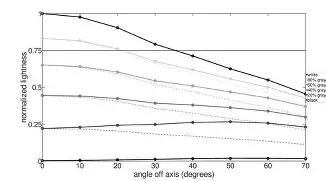
The Evolution of My Settings
What I found was that the settings I used in 2019 are not the ones I use today. Back then, I wanted everything "cranked." I wanted the brightest, most vivid experience possible. Now, I find myself seeking more balance. I’ve dialed back the backlight significantly for SDR content, which helps preserve the lifespan of the LEDs and reduces the noticeable blooming. I’ve also turned off all "Motion Smoothing" features. The 2019 model had a "clear action" feature that was supposed to help with motion, but in my testing, it just made the screen flicker too much for my liking.
For HDR, I’ve settled on the "Calibrated Dark" preset as my baseline. It provides the most accurate colors while still letting the Quantum X engine do its thing during bright scenes. One thing I noticed is that "Color Space" should always be set to "Auto" rather than "Native." Setting it to native makes skin tones look like everyone has a severe sunburn, a mistake I made for the first six months of ownership.
Final Thoughts: A Legacy of Light
Looking back at my time with the P Series Quantum X 2019, I feel a strange sense of nostalgia. It was a TV from an era where "more is more" reigned supreme. More nits, more color, more weight. It represents a pivot point in the industry where high-end features started becoming accessible to those of us who didn't want to spend $4,000 on a television. In 2026, it is no longer the king of the hill, but it isn't ready for the scrapyard either.
It remains a stunning display for 4K HDR cinematography. Every time I watch a high-quality stream or a physical disc, I am reminded of why I chose this model in the first place. The sheer impact of the light is something that modern "slim" TVs often sacrifice for aesthetics. It has survived firmware bugs, a dying remote, and the transition of the gaming industry. While I am eventually planning to upgrade to a QD-OLED to get those perfect blacks, the Quantum X has set a very high bar for what I expect in terms of brightness and "wow factor."
If you own one and it’s still working, there’s very little reason to rush out and replace it unless you absolutely need 120Hz gaming. It’s a testament to how good LED technology had become by the late 2010s. It’s bulky, it’s slow, and it’s a bit of a space heater, but when that HDR logo pops up in the top right corner and the screen illuminates the entire room, the P Series Quantum X still knows how to put on a show.
Ultimately, my seven-year journey with this TV has been one of high highs and minor frustrations. I noticed that I’ve become more forgiving of its software flaws because the hardware performance is so resilient. It hasn't "broken," and it hasn't become obsolete for movie watching. In a world of planned obsolescence, that feels like a victory. Whether it will last another seven years is anyone's guess, but for now, it remains a central, valued part of my home theater setup.